Aging in Place: Practical Home Modifications That Make Staying Home Easier and Safer
I mage via Pexels
Aging in Place: Practical Home Modifications That Make Staying Home Easier and Safer
Staying in the comfort of your own home as you age isn’t just a lifestyle preference — it’s an act of independence. But aging in place isn’t as simple as choosing to remain where you are. It’s about adapting the space so that it supports you physically, emotionally, and financially as your needs evolve. Fortunately, with some well-chosen updates, seniors can improve both their home’s safety and their own sense of ease. Whether you’re thinking long-term or facing urgent changes, it’s not about a complete overhaul — it’s about focused adjustments that honor how you live.
Start with Professional Eyes and a Personal Plan
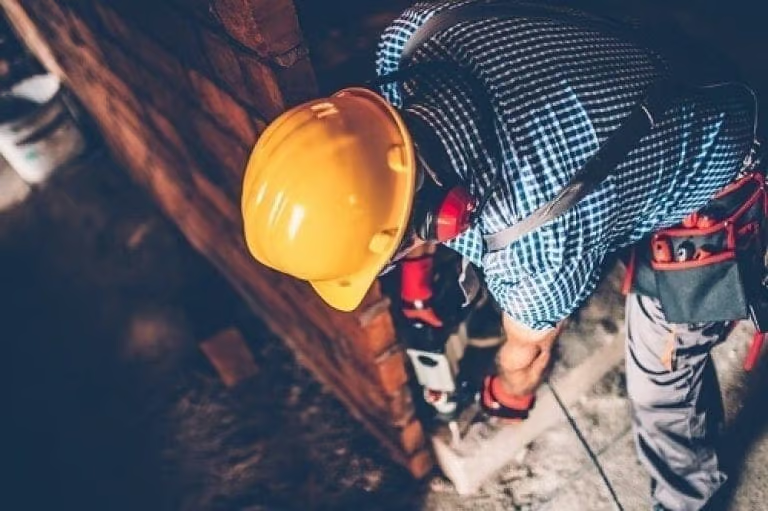
Before grabbing tools or hiring a contractor, it pays to think big-picture. Many homeowners go straight to products: grab bars, ramps, new lighting. But the smarter move is to assess the whole living environment and how it interacts with your current (and future) abilities. Some services now recommend a transdisciplinary team approach combining occupational therapists, contractors, and aging specialists to audit how your home supports — or hinders — your movement, safety, and daily tasks. It’s not always about what’s broken; it’s about seeing what’s fragile. Planning this way reduces expensive do-overs later and ensures each modification aligns with your actual routines.
Entryways, Thresholds, and Ramps Matter More Than You Think
If a house is hard to enter, it’s already a barrier. Modifying your home’s entry points doesn’t just help with walkers or wheelchairs — it helps on days when you’re carrying groceries, feeling tired, or managing pain. Small steps and narrow doors add up to frequent frustration. Fortunately, there are ways to create barrier‑free, easily accessible entryways that don’t involve bulldozers or massive expense. Widening a door just two inches can mean the difference between independent mobility and waiting for help. Consider low-rise steps, lever-style handles, or even motion-sensing lights. A home you can enter confidently is one you’ll feel safer staying in.
Protect What You’ve Updated with the Right Safety Net
After making accessibility upgrades, there’s still the issue of maintenance. If a major system breaks — plumbing, HVAC, electrical — it can undo your efforts or push you into costly emergency decisions. That’s why many aging homeowners explore protection plans that minimize repair costs and simplify scheduling. These are not replacements for insurance, but they serve a different function. They offer predictability. For seniors managing long-term budgets or hoping to avoid DIY repairs, this is a popular choice to create some buffer against home stress.
Don’t Overlook the Little Things: They Add Up
Accessibility isn’t always about major construction. Sometimes, it’s about the collection of tiny frictions — turning knobs, reaching high shelves, stepping over clutter. And those friction points, over time, accumulate into real barriers. Thoughtful changes like rocker light switches, pull-down shelves, and handle extensions can eliminate daily strain. There are simple steps like adjusting hardware height or rethinking cabinet access that immediately change the tone of a space. These aren’t cosmetic. They’re critical. The goal is to reduce the number of awkward, risky movements your body has to make to accomplish basic tasks — so you save that energy for the things that matter.
Design Movement, Not Just Space
The way you move through your home is as important as what’s in it. Are pathways wide and clear? Do rugs or thresholds catch your toe at the worst moment? Can you see where you’re going in the middle of the night? Rethinking layouts, materials, and light sources is often more valuable than buying a new gadget. Some renovations focus on floorplan updates that improve how people move through space, especially in older homes that weren’t built with accessibility in mind. This could mean widening a hallway or simply rearranging furniture to open up turning areas. And don’t ignore lighting — motion sensors or layered light setups can prevent nighttime falls and reduce anxiety.
Keep the Kitchen Comfortable, Not Just Functional
The kitchen is a surprisingly complex zone. You stand, turn, bend, reach, grip, and move — often all in the space of one meal. Making a kitchen safer doesn’t mean transforming it into a hospital room. Instead, it’s about reducing strain and increasing convenience. Lower counters, D-shaped drawer pulls, and slide-out shelves can make a big impact. You can find solutions that won’t cost you a fortune but still allow you to cook, prep, and clean with less effort and fewer hazards. Even a small update, like moving the microwave from above the stove to the counter, can prevent accidents and make daily life smoother.
Support Systems That Also Support Your Budget
Every modification sounds helpful — until you see the bill. Fortunately, you don’t have to choose between safety and savings. Local nonprofits, government programs, and state-specific grants exist to help seniors and individuals with disabilities afford essential upgrades to their homes. From zero-interest loans to community contractor networks, these options can cover ramps, rails, flooring, even minor construction. But they’re not always easy to find. The key is asking the right groups — Area Agencies on Aging, state housing authorities, or certified aging-in-place specialists. A safe home should never be out of reach simply because you didn’t know where to start.
Aging in place doesn’t require transforming your house into a medical facility — it requires making it yours again, under new terms. That means investing in movement flow, visual clarity, hardware simplicity, and budget predictability. It’s the sum of those details — a lever here, a wider path there, a little more light over the sink — that define whether a space feels empowering or confining. If your home adapts with you, it becomes more than shelter. It becomes a partnership. And in that shift, aging becomes less about limitation and more about freedom — the kind that happens in the spaces we shape for ourselves, every day, without asking for permission.
Discover the ultimate resource for your home renovation needs at The Renovation Directory, where you can connect with top professionals and transform your living space with ease!