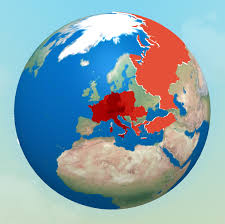
The world is full of fascinating countries, beautiful landscapes, and diverse cultures waiting to be discovered. From the mountains of Asia to the islands of the Pacific, every corner of our planet has something unique to offer. However, how well do we really know the world around us? Can we identify countries simply by understanding their geographical positions? Can we recognize neighboring nations and estimate distances between different regions?
These questions are at the heart of Globle , an entertaining online geography guessing game that transforms world exploration into an exciting daily challenge.
In a digital environment where people are constantly looking for enjoyable ways to spend their free time, combining entertainment with education has become increasingly appealing. Globle offers exactly this combination. It allows players to test their geographical knowledge, explore an interactive 3D globe, and discover countries through a simple but rewarding guessing experience.
Whether you are a student, a geography enthusiast, or someone who enjoys solving puzzles, Globe provides an interesting opportunity to explore the planet while developing valuable knowledge.
Through Globle Play players can access a browser-based geography game that challenges them to identify a mystery country using color-coded geographical clues. The concept is easy to understand, but finding the correct answer can require careful observation, logical reasoning, and a good understanding of the world’s geography.
1. What Is Globle?
Globle is a daily country guessing game built around one simple objective: discovering the identity of a hidden country.
Unlike traditional trivia games that provide several possible answers, Globle encourages players to make their own guesses. Each time a country is submitted, it appears on an interactive world map with a color indicating its geographical distance from the mystery country.
The closer the guessed country is to the correct answer, the warmer and deeper its displayed color becomes. Countries farther away appear in lighter shades.
This hot-and-cold feedback system makes the experience intuitive and engaging. Players do not need to memorize complicated instructions or understand advanced geographical calculations. They simply enter country names, observe the clues, and use the information to improve their next guesses.
One of the most interesting aspects of Globle is its rotating 3D globe. Instead of relying entirely on a traditional flat map, players can rotate the planet and explore different regions from various perspectives.
A new mystery country is selected every day, giving returning players a fresh challenge. There is also a practice mode for those who want to enjoy additional geography puzzles.
This combination of simplicity, visual interaction, and daily challenges makes Globle an appealing option for people who want to make geography more entertaining.
2. How to Play Globle on Globle
Getting started with Globle is straightforward. The game is designed to be accessible to beginners while still offering an enjoyable challenge to experienced geography fans.
Here are the basic steps to follow.
Step One: Enter a Country Name
Start by visiting Globle and opening the Globle game.
You will find a search field where you can enter the name of a country. Type your chosen country and select the matching suggestion.
Once your guess is submitted, the country will appear on the interactive globe.
Step Two: Examine the Color Clue
After making your first guess, pay attention to the color displayed on the map.
Lighter colors generally indicate that your selected country is geographically far from the mystery destination. Warmer shades, including orange and deeper red, indicate that you are getting closer.
These colors provide useful information that helps you understand where the hidden country might be located.
Step Three: Rotate and Explore the Globe
The interactive 3D globe is an important part of the experience.
On desktop devices, you can hold and drag with your mouse to rotate the globe. The mouse wheel allows you to zoom in and out.
On mobile devices, touch gestures make it possible to rotate the globe and examine different geographical regions.
This visual approach helps players explore country boundaries, islands, and neighboring nations more comfortably.
Step Four: Compare Your Previous Guesses
Instead of choosing countries randomly, compare the colors from your previous attempts.
If one country produces a warmer color than another, it suggests that the first country is geographically closer to the answer.
You can use this information to explore another country in a promising direction.
Step Five: Discover the Mystery Country
Continue entering country names until you identify the correct answer.
Globle does not impose a fixed guess limit, so players can take their time and enjoy the process of geographical discovery.
Every attempt provides another opportunity to learn something about the world.
3. Why Globe Makes Geography More Exciting
Geography is an important subject, but traditional learning methods can sometimes feel repetitive.
Memorizing country names, capital cities, and geographical boundaries is useful, yet it does not always create an engaging learning experience.
Interactive games offer another approach.
Globle transforms geographical information into a practical challenge. Instead of simply reading about countries, players actively explore their locations and make decisions based on geographical relationships.
For example, a guess in Southeast Asia may encourage players to consider nearby nations such as Thailand, Vietnam, Malaysia, or Indonesia. A guess in Europe may lead them to examine the relationships between smaller countries and their neighbors.
This process creates natural opportunities for discovery.
Players may become interested in unfamiliar countries, explore the locations of island nations, or investigate the geographical characteristics of different continents.
The game also introduces an element of curiosity. Since the mystery country changes daily, players have a reason to return and discover something new.
Globe therefore represents more than a simple guessing activity. It provides an accessible way to connect entertainment with geographical exploration.
4. Educational Benefits of Playing Globle
Although Globle is primarily an entertainment game, its mechanics encourage several useful learning skills.
Improving Geographical Awareness
The most obvious benefit is becoming more familiar with the locations of countries around the world.
Repeatedly examining the globe helps players recognize continents, geographical regions, country borders, and neighboring nations.
Over time, these experiences can improve their ability to visualize the world’s geographical structure.
Developing Logical Reasoning
Finding the mystery country requires more than entering random answers.
Players must interpret the color clues and compare the geographical positions of previous guesses.
This process encourages logical thinking and helps players make decisions using available information.
Strengthening Observation Skills
The color-coded feedback system requires attention to visual details.
Players need to compare different shades and recognize which guesses are geographically closer.
These small observations gradually become an important part of the puzzle-solving experience.
Encouraging Independent Learning
Discovering an unfamiliar country often creates curiosity.
Players may want to learn about its capital, population, language, culture, or geographical characteristics.
A simple guessing challenge can therefore encourage additional research and independent learning.
Supporting Consistent Learning Habits
The daily challenge provides a manageable opportunity to practice geography regularly.
Rather than spending hours studying complicated information, players can enjoy a short puzzle and gradually strengthen their knowledge.
5. Understanding the Interactive 3D Globe
One of the most recognizable features of Globle is its interactive 3D globe.
The visual design makes geographical exploration more engaging because players can examine the planet from different angles.
A traditional flat map represents the Earth in two dimensions. Although this format is useful, it can sometimes make geographical relationships more difficult to visualize.
A rotating globe provides a more natural representation of the planet.
Players can move between continents, examine ocean boundaries, and explore countries that might otherwise be overlooked.
The zoom functionality is particularly useful when looking at regions containing several small countries.
For example, Europe includes many nations located relatively close to one another. The Caribbean also contains numerous islands that can be difficult to distinguish on a smaller map.
By rotating and zooming the globe, players can examine these regions more carefully.
This visual interaction makes the learning experience more memorable and encourages players to become familiar with the world’s geographical diversity.
6. Helpful Features That Improve the Playing Experience
Globle combines several features that make its geography challenges accessible and enjoyable.
Daily Mystery Country
A new country is selected every day, giving players a fresh puzzle and encouraging regular participation.
Unlimited Guesses
There is no fixed number of attempts. Players can continue submitting countries until they discover the correct answer.
Color-Coded Geographical Clues
Different colors indicate geographical distance, helping players understand whether their guesses are moving in the right direction.
Interactive 3D Map
Players can rotate and zoom the globe to explore different geographical regions.
Practice Mode
The practice option provides additional country challenges for players who want to continue exploring beyond the daily puzzle.
Language and Theme Settings
The settings menu allows players to choose supported languages and adjust the visual theme.
Accessible Color Options
High-contrast color settings are available to provide a more accessible visual experience for players with different color-vision needs.
Together, these features create a simple but engaging geography experience that can be enjoyed by a wide range of players.
7. Tips for Becoming Better at Geography Guessing
Although Globle does not require specialized knowledge, developing a thoughtful approach can make each challenge more enjoyable.
Start With a Familiar Country
Choose a country whose geographical location you already understand.
This first guess provides an initial reference point for interpreting the color feedback.
Compare the Warmest Colors
Pay close attention to your closest guesses.
If a country appears in a deeper red shade, use it as a geographical reference when considering your next attempt.
Explore Different Regions
Do not focus exclusively on one continent.
Comparing countries from different geographical directions can help you understand the possible location of the mystery destination.
Remember Smaller Countries
Small countries and island nations can sometimes be overlooked.
Pay attention to regions such as Europe, the Caribbean, and Southeast Asia, where numerous countries and islands are located relatively close together.
Understand Country Borders
An interesting detail about Globle is that geographical distance is based on the minimum distance between countries’ land borders rather than the distance between their capital cities.
This means a large country can be geographically close to the answer even when its capital is relatively far away.
Understanding this distinction can help players interpret the clues more accurately.
Learn From Every Attempt
An incorrect answer is not necessarily a wasted attempt.
Every color provides information that can help narrow down the possibilities.
After completing a puzzle, take a moment to examine the mystery country’s location and identify its neighboring nations.
8. Globle as an Educational Activity for Students and Families
Educational games can make learning more enjoyable by encouraging participation rather than passive observation.
Globle is particularly suitable for informal geography practice because its rules are easy to understand.
Students can use it to become more familiar with world maps, country locations, and geographical relationships.
Teachers may also incorporate country guessing activities into classroom discussions.
For example, students could work together to identify a mystery country and explain why certain geographical regions are more likely than others.
This encourages communication, teamwork, and critical thinking.
Families can also enjoy the game together.
Parents and children can take turns suggesting countries, comparing geographical clues, and discussing interesting facts about the places they discover.
These activities provide opportunities for learning without making the experience feel like a traditional lesson.
For geography enthusiasts, meanwhile, Globle offers a fun way to test existing knowledge and discover countries that may not be particularly familiar.
9. The Convenience of Browser-Based Geography Games
Modern online games provide convenient entertainment without requiring complicated installation procedures.
Globle is browser-based, meaning players can access the game directly through a compatible web browser.
This makes it easy to start a challenge on a desktop computer, laptop, or mobile device.
The controls are designed to be straightforward.
Desktop users can rotate the globe with a mouse and zoom using the scroll wheel. Mobile users can explore the map through familiar touch gestures.
Another advantage is flexibility.
Players can enjoy a short geography challenge during a break, after completing schoolwork, or whenever they have some spare time.
The daily puzzle also creates a simple routine that encourages curiosity and regular engagement.
For people who enjoy educational entertainment, browser-based games like Globle provide an accessible way to combine learning and relaxation.
10. Discover More Games on Globle
Although Globle is the main attraction for geography enthusiasts, Globlealso features a collection of other online games.
The website includes different categories of entertainment, offering opportunities to explore puzzles, word games, trivia challenges, and other casual gaming experiences.
Players interested in testing their vocabulary can explore word-based activities.
Those who prefer logic challenges can discover puzzles that require careful thinking and observation.
There are also games focused on sports, driving, and other interactive experiences.
This variety makes the platform interesting for people with different entertainment preferences.
Someone who enjoys geographical challenges may also appreciate trivia games or puzzles that stimulate problem-solving skills.
The combination of different game categories provides additional opportunities to discover new activities without needing to search across multiple websites.
However, for anyone particularly interested in world geography, Globle remains an excellent place to begin.
11. Why Exploring the Globe Matters in Everyday Life
Understanding geography is valuable beyond the classroom or gaming environment.
The world is increasingly interconnected through international travel, business, education, culture, and communication.
Knowing where countries are located can make international news easier to understand.
It can also help people appreciate the geographical factors that influence climate, natural resources, transportation, and cultural development.
For example, understanding the position of island nations can provide useful context when learning about ocean environments and international trade.
Recognizing neighboring countries can also make it easier to understand regional relationships and historical events.
Geographical awareness encourages people to look beyond their immediate surroundings and appreciate the diversity of our planet.
Globle provides a small but enjoyable starting point for this broader exploration.
Every daily puzzle introduces an opportunity to discover another location and develop a stronger understanding of the world.
Conclusion: Start Exploring the World With Globe
Geography does not have to be limited to textbooks, complicated maps, or memorization exercises.
With interactive online experiences such as Globle, discovering countries can become an enjoyable daily activity.
The combination of a rotating 3D globe, color-coded distance clues, unlimited guesses, and daily mystery challenges creates an accessible experience for beginners and experienced geography enthusiasts alike.
More importantly, every attempt encourages players to think, observe, and explore.
Whether you want to improve your geographical awareness, challenge your knowledge of world countries, or simply enjoy an entertaining puzzle, Globe offers an interesting way to connect education with entertainment.
The world is full of fascinating places waiting to be discovered. Each country has its own geographical identity, cultural traditions, and unique story.
Visit Globle and begin your next geography adventure today.
Explore new countries, follow the clues, challenge your knowledge, and discover how much you really know about our planet.
Globe is not just about finding a mystery country. It is about making every guess an opportunity to discover the world.