Introduction to Sudoku
Sudoku is one of the most popular logic puzzles in the world. Millions of people enjoy Sudoku every day because it combines entertainment, concentration, and mental exercise. Unlike many traditional puzzles, Sudoku does not require advanced mathematics. Success comes from logical thinking, pattern recognition, and careful analysis.
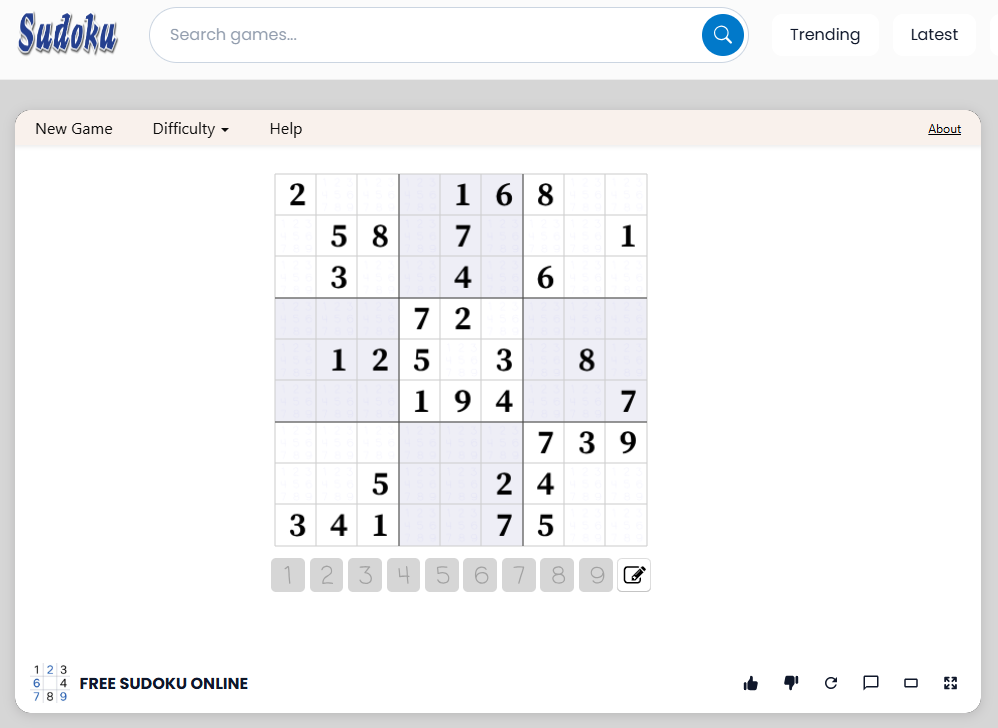
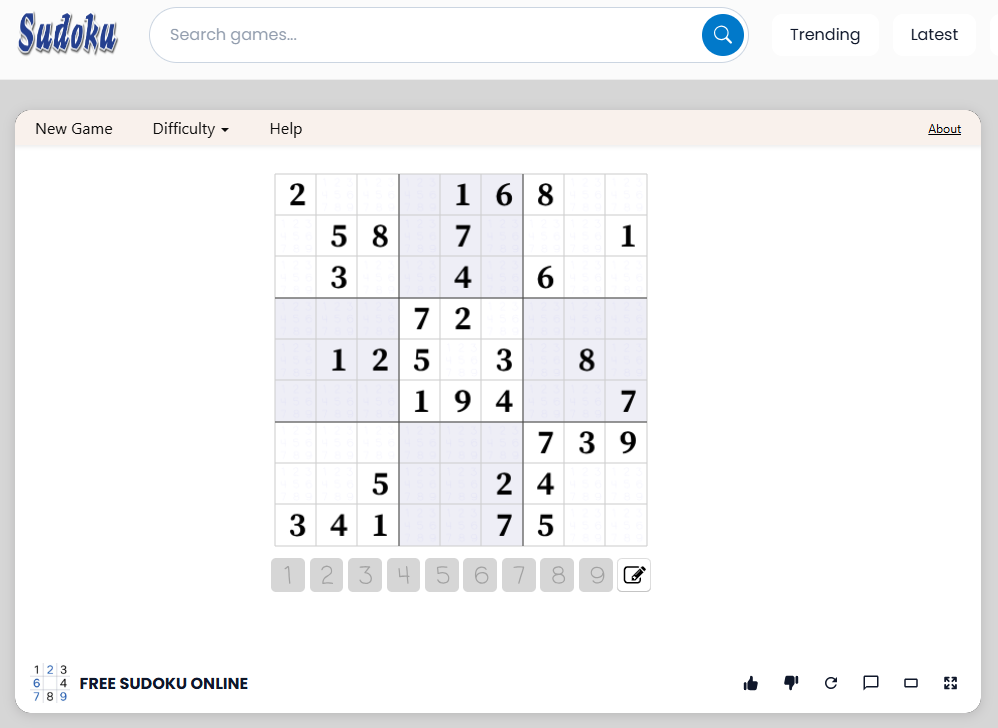
A standard Sudoku puzzle consists of a 9×9 grid divided into nine smaller 3×3 sections. The goal is simple: fill every empty cell with a number from 1 to 9. Each row, column, and 3×3 section must contain every number exactly once. This straightforward concept creates a challenging and rewarding experience for players of all skill levels.
Sudoku remains a favorite puzzle because it is easy to learn while offering endless opportunities for improvement. Whether solving a puzzle during a coffee break or completing difficult challenges for mental training, Sudoku provides a satisfying activity for all ages.
History and Global Popularity
Origins of the Puzzle
The roots of Sudoku can be traced to number placement puzzles developed during the twentieth century. Modern Sudoku gained recognition in Japan, where publishers introduced the puzzle to a wider audience. The name Sudoku became widely associated with the game and helped establish its global identity.
As newspapers and magazines began featuring Sudoku regularly, popularity expanded rapidly. Puzzle enthusiasts appreciated the balance between simplicity and complexity. The puzzle soon appeared in books, websites, and mobile applications.
Growth in the Digital Era
The rise of smartphones and online gaming transformed Sudoku into an accessible activity available anywhere. Digital platforms offer puzzles ranging from beginner level to expert challenges. Features such as hints, statistics, and timed competitions have attracted new generations of players.
Today, Sudoku is available in countless formats, including daily challenges, printable sheets, and competitive tournaments. This accessibility continues to fuel worldwide interest.
Understanding Sudoku Rules
Basic Structure
A traditional Sudoku puzzle contains eighty-one cells arranged in a nine-by-nine grid. Some cells contain pre-filled numbers, while others remain empty. Players must determine the correct number for each empty space.
Every row must include the numbers 1 through 9 without repetition. Every column follows the same requirement. Additionally, every 3×3 section must also contain all numbers from 1 through 9 exactly once.
Why Logic Matters
Sudoku is often misunderstood as a mathematics game. In reality, arithmetic calculations are unnecessary. Logical deduction forms the foundation of every solution.
Players analyze existing numbers, identify possible candidates, and eliminate incorrect choices. Each completed cell provides new information that helps reveal additional answers throughout the puzzle.
Benefits of Playing Sudoku
Improved Concentration
Sudoku requires sustained attention and careful observation. Players must examine rows, columns, and sections while tracking potential number placements. Regular practice strengthens focus and encourages mental discipline.
Many people use Sudoku as a productive activity during travel, breaks, or quiet moments because it helps maintain concentration without requiring electronic entertainment.
Enhanced Problem-Solving Skills
Every Sudoku puzzle presents a unique challenge. Players learn to approach problems methodically, evaluate possibilities, and make logical decisions.
These habits can support critical thinking in daily life. Consistent exposure to structured problem-solving exercises often improves analytical abilities over time.
Mental Exercise and Cognitive Health
Sudoku provides valuable stimulation for the brain. Solving puzzles activates memory, pattern recognition, and logical reasoning processes.
Many adults include Sudoku in daily routines as part of a broader effort to maintain mental sharpness. While Sudoku is not a medical treatment, it offers enjoyable cognitive engagement that many people find beneficial.
Effective Strategies for Beginners
Start With Easy Numbers
One of the simplest techniques involves identifying rows, columns, or sections that already contain many numbers. Fewer missing values make it easier to determine correct placements.
By focusing on areas with limited possibilities, beginners can build momentum and gain confidence.
Use the Process of Elimination
When several numbers seem possible for a cell, elimination becomes a powerful tool. Examine related rows, columns, and sections to identify numbers that cannot fit.
Gradually removing impossible options often reveals the correct answer.
Work Systematically
Random guessing can create mistakes and confusion. A systematic approach helps maintain accuracy and efficiency.
Many experienced players scan the puzzle in a consistent order, moving through rows, columns, or sections while searching for logical opportunities.
Advanced Sudoku Techniques
Candidate Tracking
As puzzles become more difficult, players often record possible numbers for empty cells. These candidate lists help organize information and reveal hidden relationships.
Careful candidate tracking allows players to identify patterns that might not be immediately obvious.
Hidden Singles
A hidden single occurs when a number can appear in only one cell within a row, column, or section. Even if multiple candidates exist in that cell, the unique placement confirms the correct answer.
Recognizing hidden singles is an essential skill for solving intermediate and advanced puzzles.
Pattern Recognition
Experienced Sudoku players frequently identify recurring structures and relationships. Certain patterns help eliminate candidates and accelerate progress.
Pattern recognition develops naturally through practice and exposure to increasingly challenging puzzles.
Common Mistakes to Avoid
Guessing Too Early
Many beginners resort to guessing when progress slows. This habit often leads to errors that become difficult to correct later.
A logical solution exists for every properly designed Sudoku puzzle. Patience and careful analysis usually reveal the next step.
Ignoring Simple Opportunities
Players sometimes focus on complex techniques while overlooking obvious placements. Reviewing the entire grid regularly helps identify straightforward solutions.
Simple observations often unlock significant progress.
Rushing Through the Puzzle
Speed can be enjoyable, but accuracy remains more important. Careless mistakes may force players to restart or spend additional time correcting errors.
A balanced pace improves both success rates and overall enjoyment.
Sudoku in Modern Entertainment
Mobile Applications and Online Platforms
Technology has expanded Sudoku beyond newspapers and puzzle books. Mobile applications offer unlimited puzzles, performance tracking, and difficulty customization.
Online communities also provide opportunities to compare strategies, participate in competitions, and learn new techniques from experienced players.
Daily Puzzle Challenges
Many websites publish fresh Sudoku puzzles every day. Daily challenges encourage consistent practice and help players develop long-term skills.
Regular participation keeps the experience engaging while providing measurable improvement over time.
Conclusion
Sudoku continues to captivate puzzle enthusiasts because it combines simplicity, logic, and intellectual satisfaction. The game requires no advanced mathematics, expensive equipment, or extensive preparation. A single puzzle can provide meaningful mental stimulation and enjoyable entertainment.
From beginners learning basic rules to experts mastering advanced techniques, Sudoku offers challenges for every skill level. Consistent practice improves concentration, problem-solving abilities, and logical thinking while delivering a rewarding sense of achievement. For anyone seeking a fun and engaging brain exercise, Sudoku remains an excellent choice that continues to stand the test of time.