Digital shopping has solved many of the practical problems associated with buying products. Customers can search from almost anywhere, compare multiple options in minutes, read reviews, check availability, and complete an order without entering a physical store. Yet convenience does not always equal confidence.
One of the biggest challenges of buying online is perspective. A customer may see a product clearly on a screen but still struggle to understand what it will actually look like, how large it might feel, or whether its appearance matches their expectations. Static photographs provide valuable information, but they cannot always answer every question a shopper has.
This is where digital shopping is beginning to move in a more interactive direction. Instead of asking customers to make decisions from limited viewpoints, brands can give them more ways to examine products. The result can be a shopping experience with less guesswork and more personal exploration.
Seeing a Product Is Not the Same as Understanding It
A product photograph can make an item look attractive, but attractiveness is only one part of evaluation. Customers also want to understand what they are seeing.
A chair might look comfortable in a photograph, but its proportions may be difficult to judge. A decorative object may appear small because of the way the image is framed. A piece of equipment may have several important components that are easier to understand when viewed from different angles.
This difference between seeing and understanding is particularly important online because customers cannot physically handle the product.
In a store, people naturally move around an object. They lean closer, step back, turn it over, compare it with nearby products, and look at details from different directions.
Digital shopping can provide its own version of this behavior when product experiences allow customers to explore rather than simply observe.
The First Digital Interaction Can Happen Anywhere
The customer journey does not always begin with a search bar.
A person might notice a product while walking through a store, see it on packaging, encounter it at an event, or notice it in printed advertising. These moments can create curiosity before the customer ever visits the brand’s website.
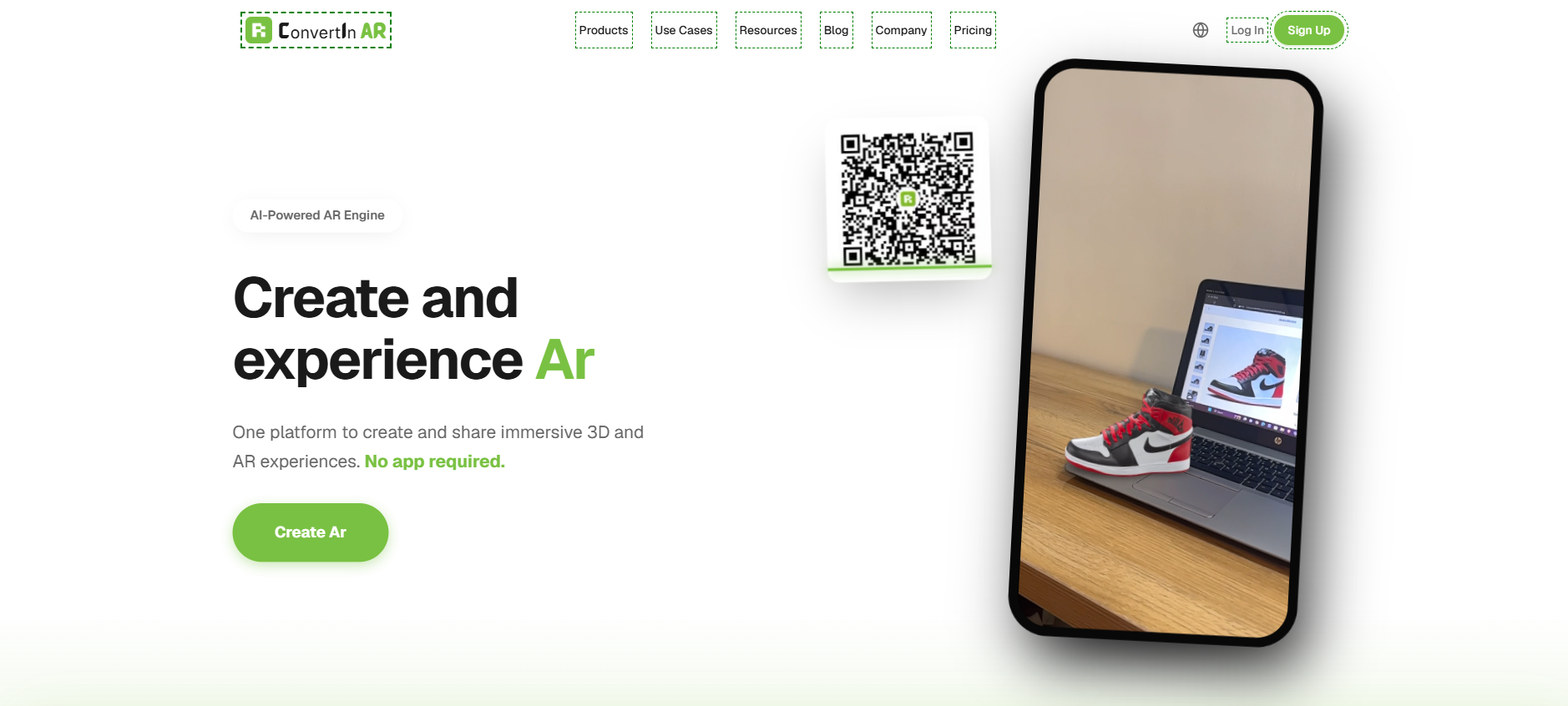
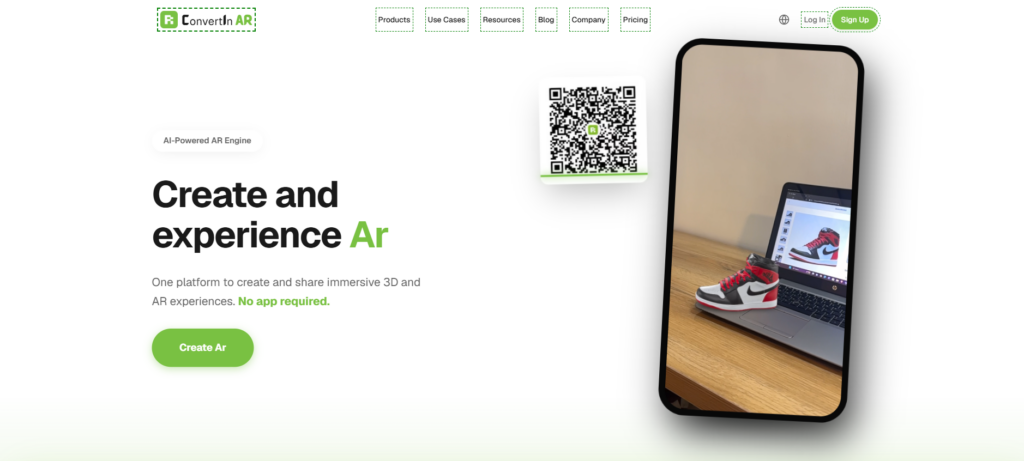
A augmented reality qr code can turn that moment of curiosity into a direct digital interaction.
Instead of asking customers to remember a product name and look it up later, a physical touchpoint can give them an immediate path toward more information. The smartphone becomes a bridge between what the customer is seeing and what they can explore digitally.
This approach can be particularly useful when a physical display cannot communicate everything about a product. The real-world object provides the initial context, while the digital experience provides additional perspective.
The important thing is that the transition should feel natural. The customer should not feel as though they are leaving the shopping experience to use another system. The digital layer should simply extend the moment they are already having.
Perspective Changes the Questions Customers Ask
When customers have only one photograph, they tend to ask questions that the photograph cannot answer.
What does the back look like? How deep is it? How does the shape change from another angle? What details are hidden from view?
Giving customers additional perspectives can change the nature of these questions.
Instead of wondering what the product might look like, they can investigate it directly. Instead of imagining another angle, they can explore one.
This shift is subtle but important. The customer moves from prediction to observation.
That can make the decision-making process feel more comfortable because shoppers are not relying entirely on the brand to choose which details they should see.
Product Photography Can Become the Beginning of Something Bigger
Brands already invest heavily in product photography. Images are created for websites, advertisements, social platforms, catalogs, marketplaces, and other channels.
The challenge is finding ways to make those assets work harder.
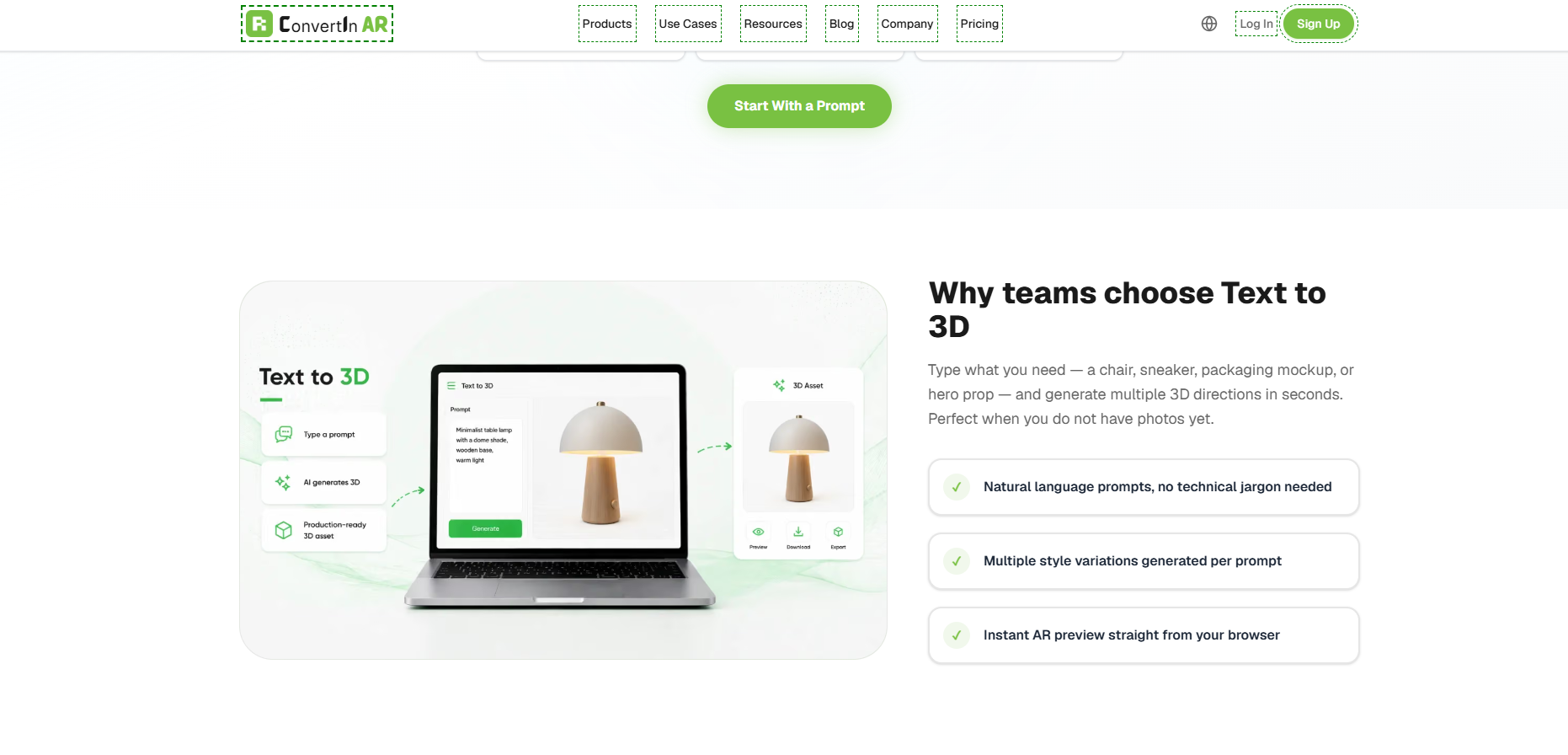
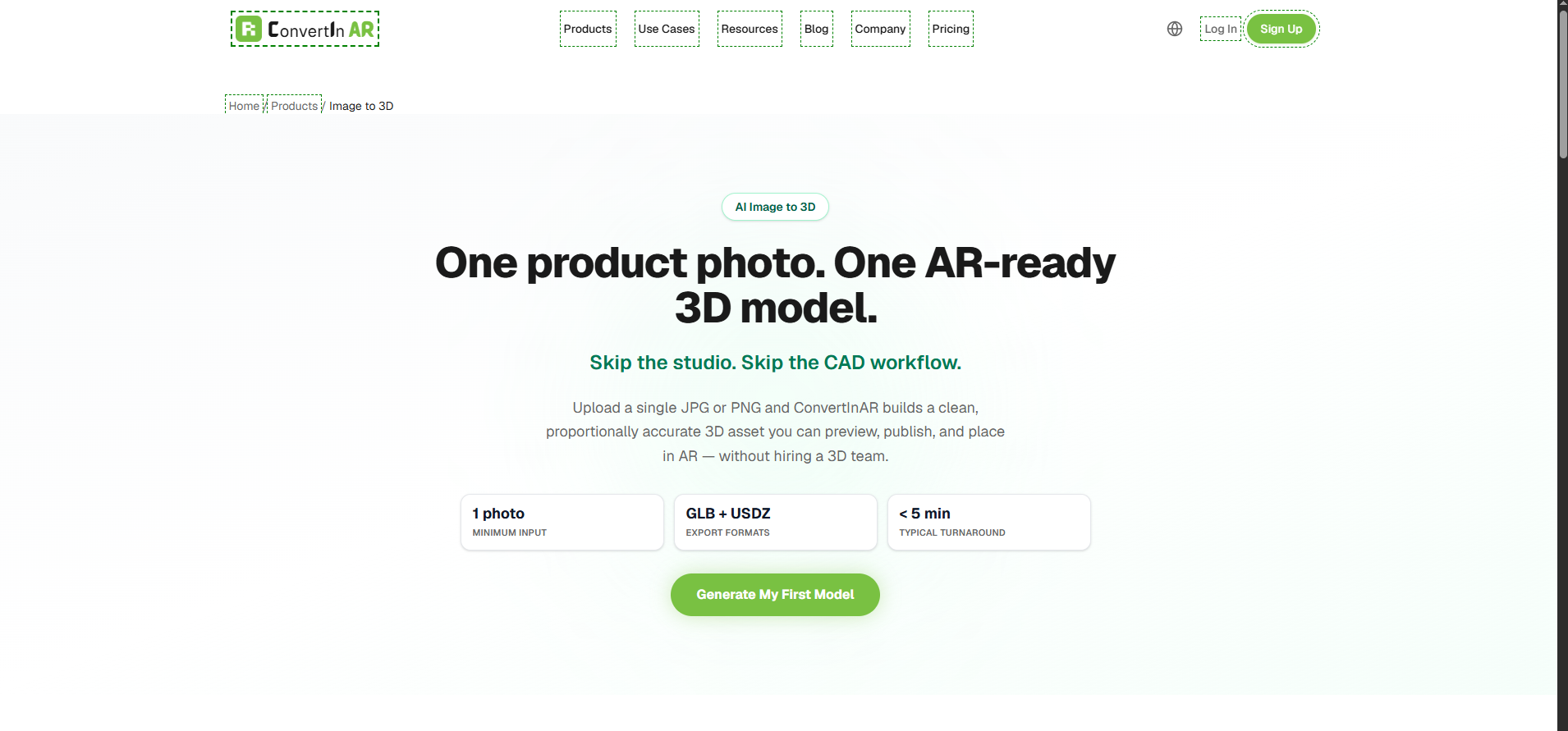
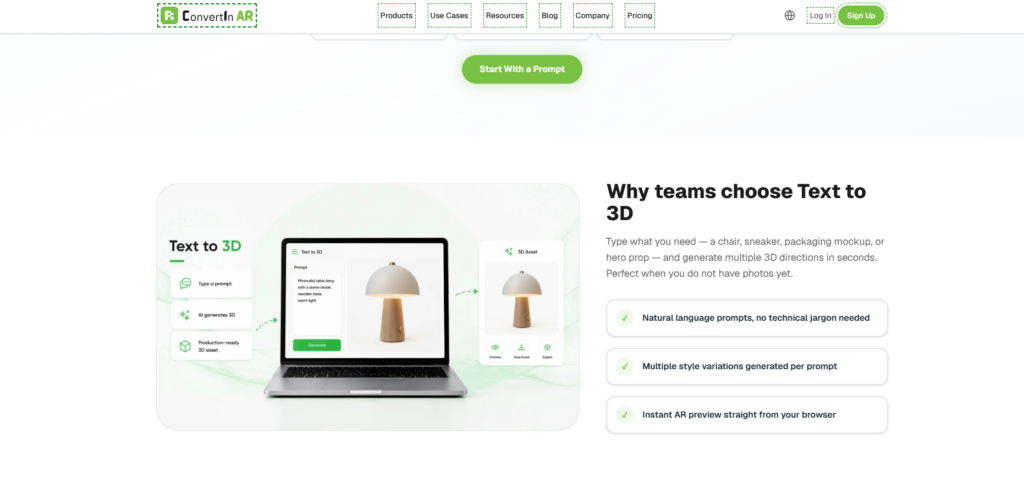
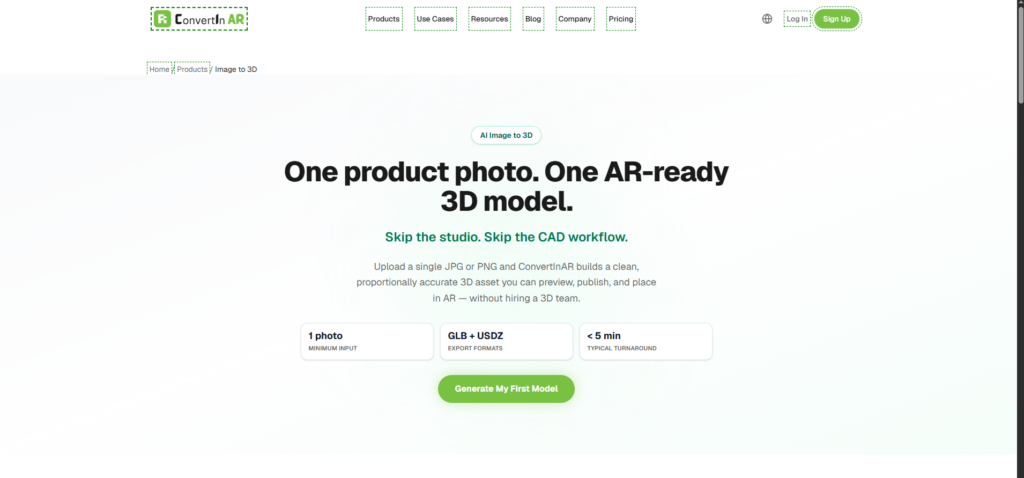
Technologies that convert image to 3D model can provide one possible path from conventional product photography toward interactive product experiences.
A digital three-dimensional representation can give customers more freedom to inspect an item. They can view its form from different directions and develop a stronger understanding of its physical characteristics.
For brands, the opportunity goes beyond a single interactive feature. A reusable digital representation can potentially support product pages, marketing experiences, retail displays, and other customer touchpoints.
This makes product content more flexible.
Instead of creating a separate visual asset for every channel, businesses can begin building content that can move between different parts of the customer journey.
Less Guesswork Starts With Better Visual Context
Perspective becomes especially valuable when customers need to imagine a product in relation to something else.
A product shown against a blank background may be visually clean, but it does not always communicate scale.
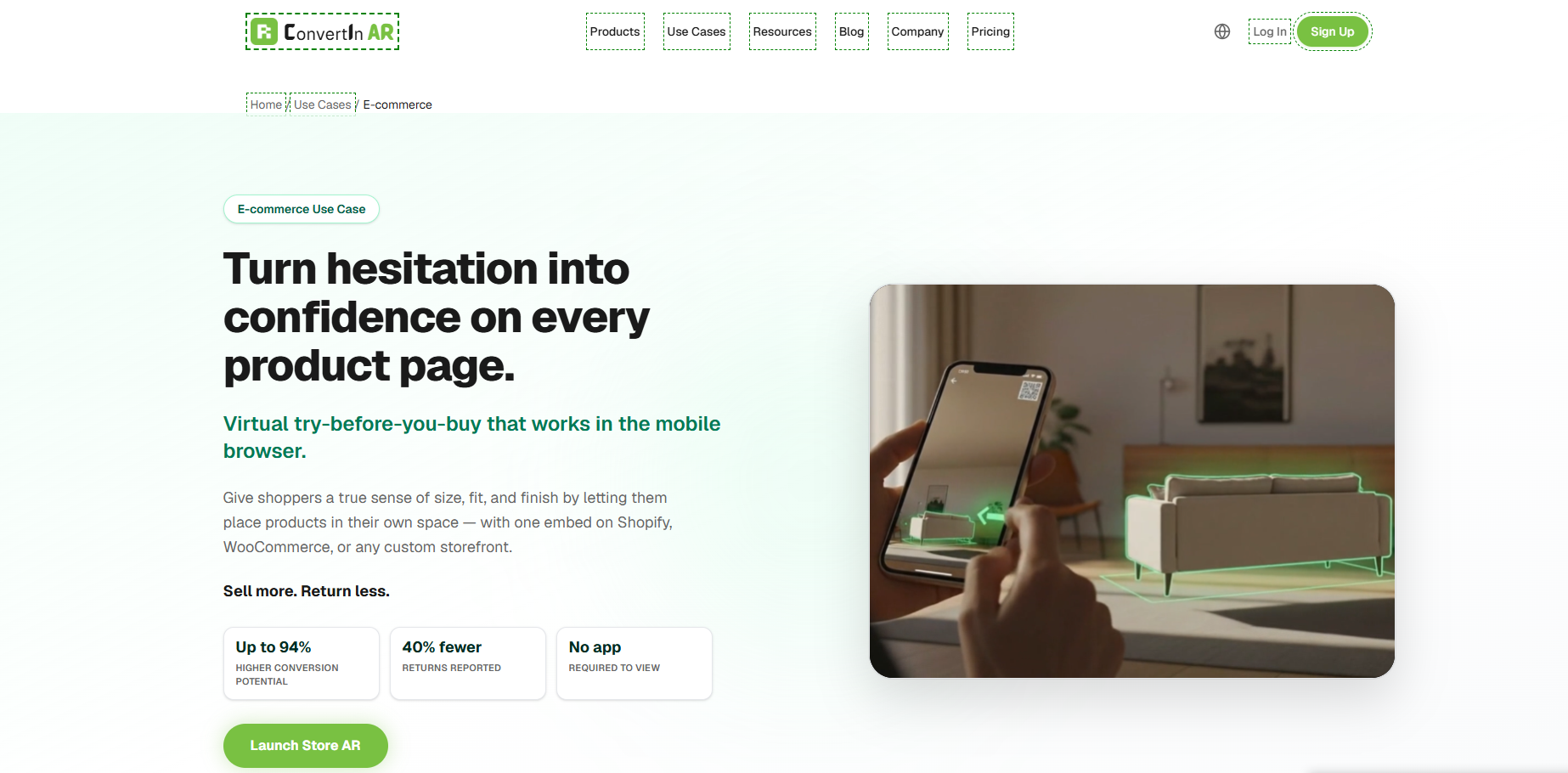
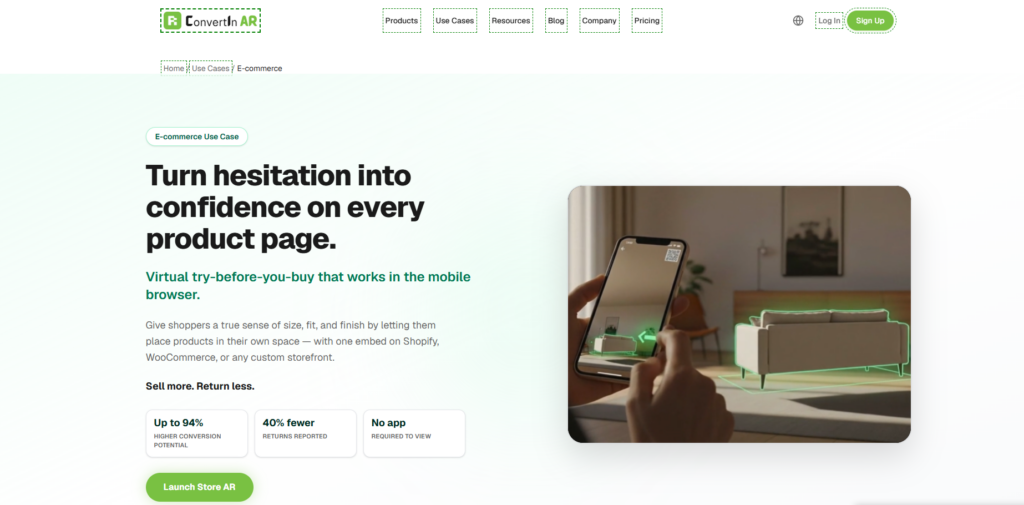
Consider furniture. A customer may understand the listed dimensions but still struggle to imagine how a sofa will feel within a particular room. The same issue can occur with lighting, home accessories, appliances, and other products whose usefulness depends partly on their relationship with surrounding space.
Context helps turn abstract measurements into visual understanding.
The same principle applies to fashion, consumer electronics, sporting equipment, and many other categories. Customers often want to know not only what a product looks like, but how it relates to the environment where they expect to use it.
Digital experiences can provide that additional layer.
Customers Do Not All Need the Same Amount of Information
One of the problems with traditional product pages is that they often assume every shopper follows the same path.
A first-time buyer may need extensive information. An experienced customer may only want to confirm a particular detail. Someone comparing several options may focus on differences, while another shopper may care primarily about appearance.
An interactive experience can accommodate these differences.
Customers can spend more time where they need it and move quickly through areas that are already familiar.
This can make the shopping experience feel less overwhelming because information is available without necessarily being forced upon the customer all at once.
The experience becomes more flexible because the shopper determines the depth of exploration.
Exploration Can Reveal Details Customers Did Not Expect
Interesting discoveries often happen when people are given room to explore.
A customer may notice a product feature they did not originally consider. They may discover a particular shape, configuration, material detail, or design element while examining the product from another perspective.
This can make digital shopping more engaging without relying on aggressive promotional techniques.
The product itself becomes the source of discovery.
That distinction matters because customers are often more receptive to information they discover while investigating something they already care about. The experience feels less like advertising and more like useful exploration.
Comparison Becomes More Visual
Online shoppers often compare products using names, prices, specifications, ratings, and photographs.
These tools are useful, but some differences are difficult to communicate through text alone.
Interactive visualization can help customers focus on physical distinctions. Shape, proportions, structure, and design can become easier to compare when shoppers have more control over how products are viewed.
This can be particularly valuable when several products appear similar in a standard catalog.
Rather than asking customers to remember small differences between static images, an interactive experience gives them more opportunities to examine those differences directly.
Comparison becomes less dependent on memory and more dependent on observation.
Digital Perspective Can Support Physical Retail
Better digital visualization does not mean physical stores are becoming unnecessary.
In fact, interactive content can make physical retail more useful.
A customer standing in a store can see the real product while using digital content to explore additional options. They might examine a different color, view another configuration, or investigate a product variation that is not physically displayed.
The physical environment provides something digital content cannot completely replace: real-world presence.
The digital layer adds flexibility.
Together, they can create a richer evaluation process than either environment could provide alone.
Product Displays Can Become More Informative Without Becoming Crowded
Retail environments often have limited space.
Trying to place every specification, variation, instruction, and promotional message directly beside a product can make a display difficult to navigate.
Digital interaction offers another possibility.
The physical display can remain simple while giving interested customers a path toward deeper information.
This allows different shoppers to engage at different levels. Someone who only wants a quick impression can continue browsing, while someone who needs more detail can choose to explore further.
The result can be a cleaner physical environment without sacrificing access to information.
Packaging Can Give Products a Longer Digital Life
Packaging is another place where perspective can be extended.
Once a customer owns a product, the package may become an ongoing connection to digital content. It can provide access to demonstrations, product information, related items, instructions, or interactive experiences.
This makes packaging more useful beyond the moment of purchase.
The same principle can also apply before purchase. A customer examining a package on a shelf may want to understand the product in greater detail before making a decision.
Physical packaging can therefore become part of the discovery process rather than simply a container.
Hospitality Can Benefit From More Visual Choice
Perspective is not only important for physical products.
Restaurants and hospitality businesses also depend on customers making decisions based on limited information. A written description can explain ingredients and preparation, but it may not fully communicate presentation or appearance.
This creates opportunities for augmented reality menus to provide another way of exploring choices.
Instead of relying entirely on names and descriptions, customers can interact with visual representations before deciding what to order.
The experience can make selection more engaging while helping customers develop clearer expectations.
The same concept applies more broadly: whenever people are expected to make a decision based on something they cannot fully experience beforehand, better visualization can reduce uncertainty.
Reviews Can Add a Different Kind of Perspective
Visual exploration and customer reviews solve different problems.
Interactive content can help customers understand what something looks like. Reviews can help them understand what using it is actually like.
Combining the two gives shoppers a wider perspective.
A customer might examine a product visually and then read reviews to understand comfort, durability, usability, or other practical characteristics.
This creates a more balanced decision process.
The goal is not to replace one form of information with another. It is to allow different types of information to complement each other.
The Product Page Can Become a Personal Investigation
As digital shopping becomes more interactive, the product page can take on a different role.
Instead of being a fixed collection of information, it can become a space where customers investigate their own questions.
One shopper may begin with images. Another may explore a 3D representation. Someone else may move directly to reviews or specifications.
There does not have to be one correct path.
This flexibility can make ecommerce feel more aligned with real-world decision-making, where people rarely follow identical processes.
Better Perspective Can Reduce Decision Fatigue
More content does not automatically make shopping easier.
If every product page contains endless images, paragraphs, videos, specifications, and promotional messages, customers can become overwhelmed.
The purpose of interactive content should therefore be clarity rather than volume.
A well-designed experience can allow customers to access deeper information when they need it without forcing them to process everything at once.
This gives shoppers control over the pace of evaluation.
They can investigate one detail, move to another, and stop when they feel confident enough to decide.
Experience Can Continue Beyond the First Visit
Customers do not always make a purchase during their first interaction with a product.
They may discover something today, compare alternatives tomorrow, discuss it with someone else, and return several days later.
Digital content can support this slower decision process.
An interactive experience gives customers something useful to return to rather than requiring them to reconstruct their research from the beginning.
This can be particularly valuable for considered purchases where customers need time before committing.
A Better Digital Shopping Experience Is About Understanding
The future of online shopping does not necessarily depend on adding more features to every product page.
The more important shift is giving customers better ways to understand what they are seeing.
Perspective can come from multiple angles, richer visualizations, contextual environments, physical-to-digital connections, and interactive product content.
Together, these elements can reduce the amount of imagination customers are forced to do on their own.
That is the real opportunity.
Digital shopping can remain convenient while becoming more informative and engaging. Customers can still search quickly and purchase easily, but they can also pause, investigate, compare, and develop a stronger sense of what they are considering.
The experience becomes less about asking customers to trust a photograph and more about giving them opportunities to explore.
From Guessing to Exploring
Online shopping will always have some distance between the customer and the physical product. Digital experiences cannot completely reproduce the feeling of holding an object or standing beside it.
But they can reduce the uncertainty created by that distance.
More perspectives can reveal more details. Interactive content can give customers more control. Three-dimensional representations can make physical characteristics easier to imagine. Connected retail experiences can bring digital information closer to the moment of discovery.
The result is a more confident form of digital shopping.
Customers do not have to rely entirely on assumptions. They can investigate the product, follow their curiosity, compare what they find, and make decisions with a clearer understanding.
That is where the next stage of ecommerce can become more valuable: not simply by making products easier to find, but by making them easier to understand.
When digital shopping provides more perspective, there is less left to guess.