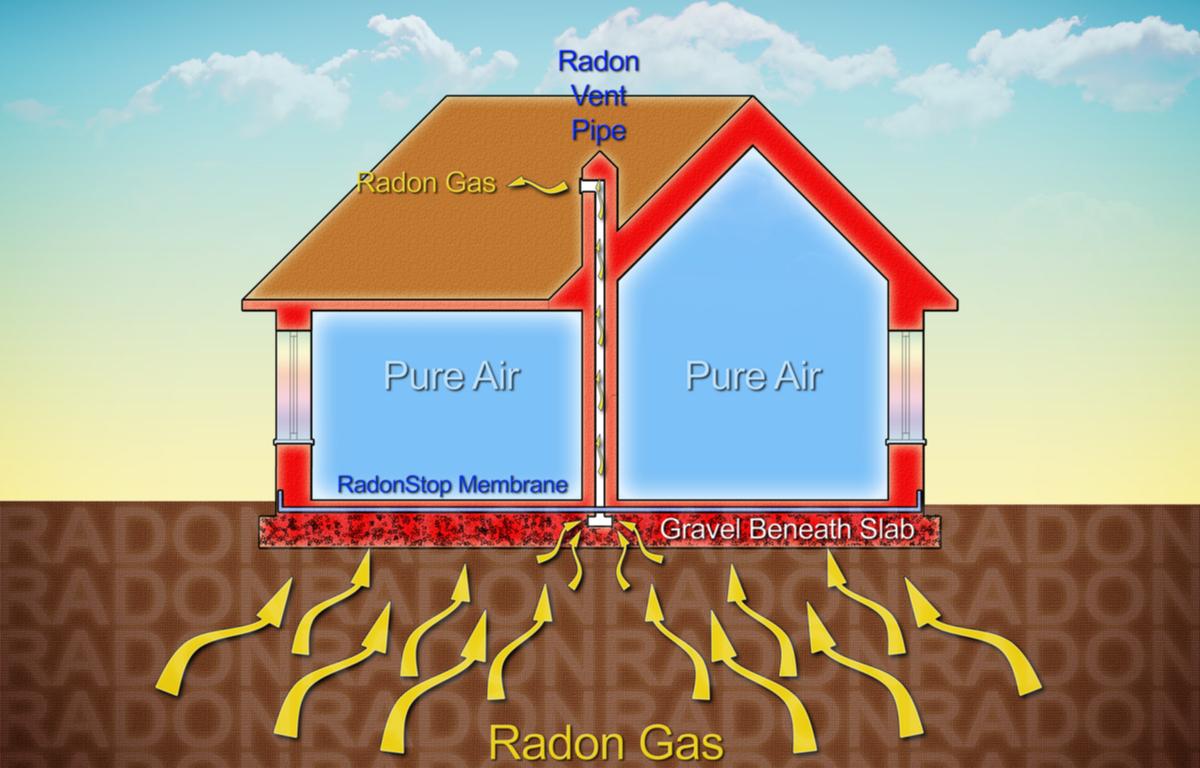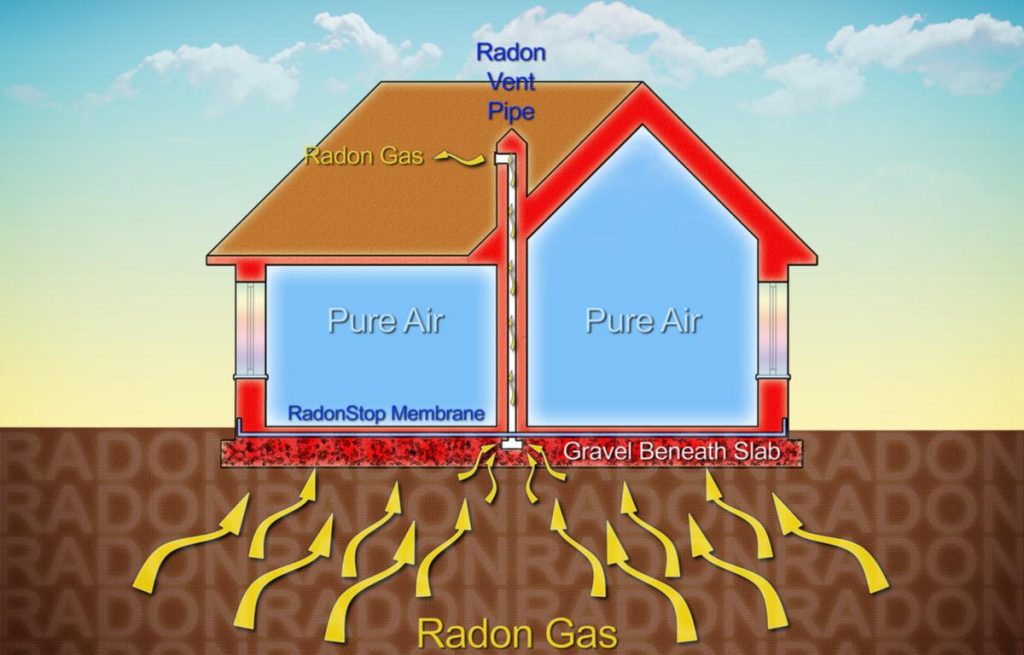
Radon gas is an issue in a lot of places across the country. The radioactive gas can enter your home through foundation cracks and seep into your basement, where it can build up to dangerous levels. After smoking, radon is thought to be one of the most important risk factors for developing lung cancer.
In most areas, having the radon levels in a home check is a normal part of the home inspection process before making a purchase. The test is typically carried out in the basement because it is the lowest point of the house. No open windows or doors must be present for the duration of the test, creating what is known as “closed home circumstances.”
In most cases, radon exposure is discovered during a routine home inspection. A radon level in a residence of 4 pCi/L or less is considered safe by the Environmental Protection Agency. A radon mitigation system must be installed if levels above this are discovered during a home inspection prior to closing on a new property.
It is important to continue monitoring your home’s radon levels even after a mitigation system has been installed. The levels of radon within a home might change depending on the time of year, so it’s important to monitor them after installation. Or, should your mitigation system to fail in some way, an alarm indicating radon accumulation would be advantageous
Similarly, even if the radon levels in your home are lower than the recommended 4 pCi/L (1-3 pCi/L), there is still cause for concern. It’s recommended that you keep an eye on the indoor climate to make sure your levels don’t creep up.
There are two primary types of radon toronto testing equipment for the home: disposable test kits and electronic gas monitors (multi-use). Electronic radon gas detectors have a higher initial cost than single-use test kits, but they save money in the long run. Most electronic radon monitors will also sound an alarm if the levels of radon in your home reach dangerous heights.
Radon in Homes Linked to Nuclear Bombs and X-Ray Radiation
The radon concentration in the average home is unknown to many of its owners. Probably the vast majority of house owners think the water levels are fine. Perhaps they have no idea what radon gas is or why it is causing such a stir right now. Surely if there were an issue, you would have been made aware of it by now.
Hundreds of thousands, even millions, of people have lost their lives to radon-induced lung cancer. Naturally, we’d like to think that we know about these hazardous things in our houses before they cause damage. The Environmental Protection Agency (EPA) estimates that roughly 20,000 people develop lung cancer each year; the World Health Organization (WHO) attributes this to this gas.
Fortunately, radon testing is simple and quick, and the gas levels in your house may be drastically decreased through mitigation and kept at safe levels for as long as you live there.
In regards to radon and nuclear weapons
Not only is this gas essentially undetectable to humans and a known carcinogen to the lungs, but it also has a straightforward connection to the deployment of nuclear weapons. Actually, it’s the same thing. Let me explain.
Radon is produced when uranium in the soil decays. Once this process gets going, it releases very hazardously polonium and radium into the air.
Atomic bombs used during the Cold War also made use of uranium. As a result, once the bomb had demolished an area of land and the uranium had decomposed, sufficient amounts of radon gas were released to cause radiation sickness among the local populace.
Even though the typical outdoor level of radon is about.4 pCi/L (picocuries per liter), the levels of toxicity in an area are significantly heightened when unnaturally produced in the form of a nuclear explosion.
A Radon and X-Ray Perspective
You may not have known this, but the radon in your home can emit more radiation than a chest x-ray at a hospital. Take a look.
Toggle between Singular and Plural forms This gas is a carcinogen and the root cause of the radiation crisis.
Radon with a concentration of 4 picocuries per litre (pCi/L) emits as much radiation as 100 chest x-rays. What makes that number so intriguing is the fact that it exceeds the maximum number of chest x-rays allowed by most hospitals. It’s true that most hospitals cap annual chest x-rays at four. This amounts to.16 pCi/L for each x-ray and.64 pCi/L annually. Or, to put it another way, do you get why the World Health Organization set their action threshold at 2.7 pCi/L?
Any household should jump at the chance to get radon testing and mitigation since the dangers of radon exposure are so much greater than those of chest x-rays.
In Michigan, Insta-Dry Basement Systems is your go-to radon mitigation company. They offer radon testing and tried-and-true radon mitigation methods all around Michigan and are part of the National Radon Defense network.
In her present role, Samantha Walton writes articles for DIY and renovation websites. She has a Bachelor of Arts in Communication from an approved university, with a focus on Public Relations. She hopes to attend seminary one day and advance her knowledge. She has worked as a marketing and public relations intern, written for local television, and edited church newsletters, flyers, and other written materials.